A mid-40s woman sitting near a window with one hand on her chest, holding a warm mug, with soft bedroom lighting suggesting perimenopause symptoms and heart-focused wellness.

Pre Menopause Symptoms: What Your Body Is Telling You Before Menopause Begins

Perimenopause, the transitional phase before menopause, brings a constellation of symptoms that often catch women off guard: irregular periods, hot flashes, night sweats, brain fog, mood swings, sleep disruption, and changes in metabolism. These symptoms typically begin in your 40s, though some women notice them earlier, and they signal a critical window for your long-term health, particularly your cardiovascular system.
What many women don’t realize is that the hormonal shifts of perimenopause directly affect heart health. Estrogen, which has been protecting your blood vessels and helping regulate cholesterol, begins to …

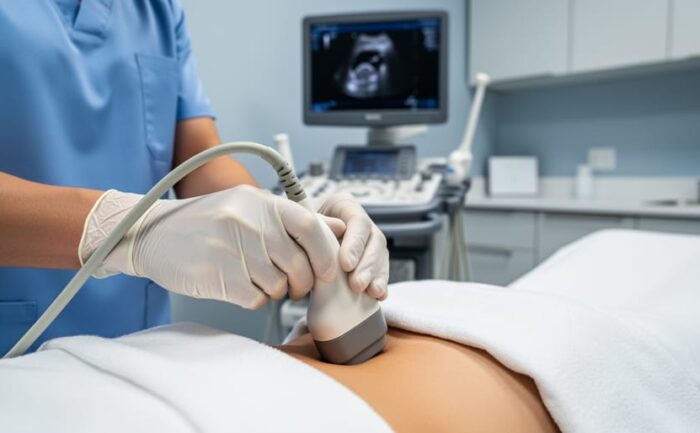
Clinician performing a transvaginal ultrasound exam in a modern women’s health clinic, with the ultrasound probe in focus and medical equipment in the background.

Can Endometriosis Be Seen On Ultrasound? Here’s What Imaging Can and Can’t Detect

Yes, endometriosis can be seen on ultrasound, but with important limitations. Transvaginal ultrasound is quite sensitive at detecting ovarian endometriomas (those characteristic “chocolate cysts”) and can identify deep infiltrating endometriosis when performed by an experienced examiner. However, it cannot reliably detect superficial peritoneal endometriosis, which is one of the most common forms of the disease.
If you’ve been experiencing pelvic pain, painful periods, or fertility challenges and your doctor has ordered an ultrasound, you’re likely wondering whether this test will finally provide answers. The…

“Woman in her early 40s standing near a bathroom mirror holding a warm mug, suggesting perimenopause transition and self-care.”

Peri Menopause Age: What to Expect and When It Begins

Perimenopause is the transition period when your body begins shifting toward menopause, marked by changes in your menstrual cycle and fluctuating hormone levels. Most women enter this phase between ages 40 and 50, though the timeline varies widely from person to person. It ends officially when you’ve gone 12 months without a period, at which point you’ve reached menopause.
Understanding when perimenopause typically begins matters for more than just managing hot flashes and irregular cycles. This transition can last up to 10 years, and the hormonal changes during this time have significant implications for your heart …

Canadian woman in a clinic room resting her hand on her chest while looking at a wearable fitness device, representing heart health awareness for women.

Women’s Heart Attack Statistics: The Alarming Numbers Every Canadian Woman Should Know

Every 20 minutes, a woman in Canada dies from heart disease or stroke. Let that sink in. While many of us worry about breast cancer or other health threats, cardiovascular disease remains the number one killer of Canadian women, claiming more lives than all forms of cancer combined.
Here’s what the numbers tell us: approximately 90% of Canadian women have at least one risk factor for heart disease. Among women who experience heart attacks, nearly two-thirds will fail to make a full recovery. …

Heart Health: Why Women Need to Pay Attention to These Symptoms

Cardiovascular disease is the leading cause of death for women, claiming more than one in three lives each year. Shockingly, more than half of these deaths happen in women. In fact, every day in France, 400 people die from cardiovascular disease, and many of them are women.

What’s even more concerning is that women are experiencing heart issues at younger ages.

A recent study found that between 2009 and 2013, hospitalizations for heart attacks increased by 4.8% among women aged 45 to 54. This rise is linked to lifestyle changes over …

Why Cardiovascular Disease is a Growing Concern for Women, and What We Can Do About It

Cardiovascular disease is often seen as a concern for men, but the reality is that it affects women just as much, if not more. In fact, the World Health Organization has warned that cardiovascular disease will continue to be a global threat over the next 20 years.

While it’s true that death rates from cardiovascular disease have been declining, this decline is not equal across all age groups or genders. In particular, the rates for women under 55 are rising, which is cause for concern.

Every day, more than 200 women in France die from …

Understanding Atrial Fibrillation and Its Impact on Women

Atrial fibrillation (AFib) is the most common heart rhythm disorder, affecting millions of people worldwide. Although it may sound complicated, it’s important to understand how this condition works and why it’s so crucial to diagnose and treat it early.

What is Atrial Fibrillation?

Atrial fibrillation is caused by an issue in the heart’s electrical system, particularly in the atria, which are the upper chambers of the heart. When the heart’s electrical impulses become disorganized, it leads to an irregular heartbeat, known as …