
 dorris
If a strange symptom shows up during perimenopause or menopause, get it checked sooner rather than later, and treat chest pain, pressure, tightness, or burning as a reason to seek care right away rather than wait and see. For other oddities, like a fluttering heartbeat that arrives with a hot flash or seems to come from nowhere, book an appointment in the coming days and ask for the heart to be looked at first. That order matters more than anything else in this article.
Palpitations have many possible causes, and hormonal change is only one of them. The usual first step is ruling out arrhythmias, which are changes in the heart’s electrical rhythm, through appropriate cardiac testing. Once the heart has been looked at, a menopause specialist can help you explore whether hormones are playing a role.
Why the rush to rule out the heart? Because the two can look alike. In women, chest pain often feels less like a crushing weight and more like discomfort or tightness, and heart attack symptoms go unrecognized in over 50% of women. Weakness, shortness of breath, or a racing heartbeat without any chest pain can also signal a crisis.
None of this is meant to scare you. It’s meant to put you in charge, so you know which symptoms can wait for a regular appointment and which can’t.
The Quick Answer: Don’t Guess, Get New or Unexplained Symptoms Checked

If your heart flutters, pounds, or your chest feels tight, here’s the short answer: don’t assume it’s “just menopause.” Palpitations and chest tightness can have many causes, and yes, hormonal changes can be one of them. But hormones shouldn’t be the first guess. The sensible order is to look at your heart first, then explore hormones afterward.
Here’s how that usually plays out. A clinician starts by investigating the possible causes of your symptoms. One of the first steps with palpitations is ruling out arrhythmias, which are abnormalities in the heart’s electrical rhythm, through appropriate cardiac testing. Once the heart has been looked at, a menopause specialist can help explore whether hormonal changes may be playing a role.
This matters because the overlap is real. Palpitations can show up during a hot flash or seem to come from nowhere. And for women, heart trouble often feels more like discomfort, pressure, tightness, or burning than the dramatic crushing pain people picture. Heart attack symptoms go unrecognized in over 50% of women, so guessing can be a risky game.
One clear, calm rule: if symptoms are sudden, severe, or getting worse, seek emergency care right away. Don’t wait to see if it passes.
And for everything else that’s new or unexplained, please ask. Getting checked isn’t overreacting. It’s simply taking your own body seriously.
Why Menopause Symptoms and Heart Trouble Can Look So Alike
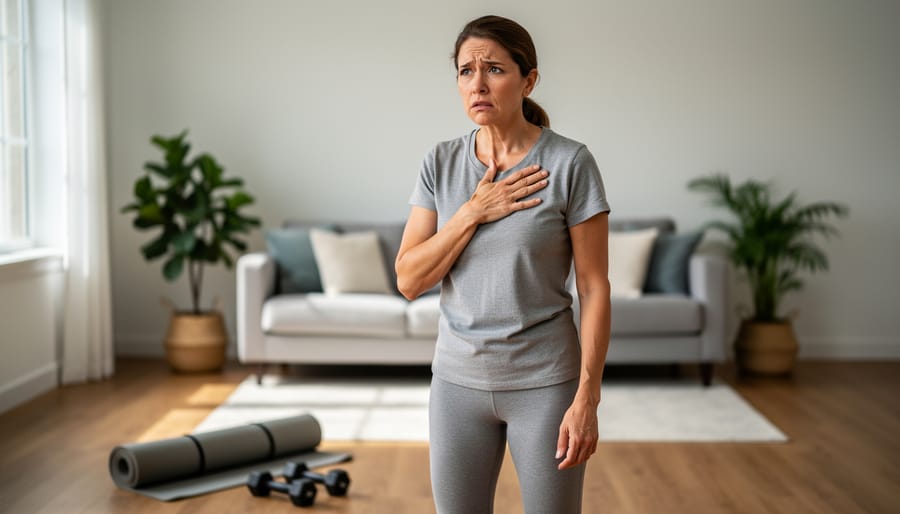
Palpitations: Flutters, Pounding, and Skipped Beats
Palpitations are one of the strangest menopause symptoms because they can feel so different from woman to woman. Some describe a flutter, like a small bird in the chest. Others feel pounding, a racing heartbeat, or a skipped beat followed by a heavy thump. They can arrive in the middle of a hot flash, or seem to come out of nowhere, which is often what makes them so unsettling.
The honest truth is that palpitations can have many different causes, and hormonal change is only one possibility. That’s why the goal is to understand what’s behind them rather than guess. One of the first steps a clinician takes is to rule out an arrhythmia through appropriate cardiac testing. Some women also notice that women’s heart symptoms can look different from what they expect, and women may lack chest pain even when something serious is going on.
A few plain-language terms can help:
- Palpitations
- The feeling that your heart is fluttering, pounding, racing, or skipping a beat.
- Arrhythmia
- An abnormality in the heart’s electrical rhythm. One well-known example is atrial fibrillation.
- Hot flash (vasomotor symptom)
- A sudden wave of heat, often with sweating, that is linked to hormonal changes and can come with a pounding heartbeat.
Once heart-related causes have been investigated, a menopause specialist can help explore whether hormones may be playing a role.
Chest Tightness, Pressure, and Burning in Women
When people picture heart trouble, they often imagine a crushing, movie-style pain. In women, it frequently looks different. The symptoms women most often report include chest pain, pressure, tightness, or burning. And for many women, it feels less like pain and more like discomfort, a vague tightness or heaviness that’s easy to brush off.
That’s part of why it gets overlooked. A tight chest during a stressful week, or a burning feeling you’d normally blame on dinner, doesn’t announce itself as an emergency. Heart attack symptoms aren’t recognized in over 50% of women, and that includes by the women having them.
Other signs can travel with it, or even show up on their own. Weakness and shortness of breath are two of them. Some women arrive at the emergency department with no chest pain at all, just weakness, breathlessness, or a rapid heartbeat, and they can still be in crisis.
Here’s the part worth holding onto: you can’t work out the cause by how it feels. Tightness from anxiety, from hormonal shifts, and from the heart can feel remarkably alike. Sorting out what’s behind it takes proper assessment, not guesswork. If something feels off, that’s reason enough to get it looked at.
Timing Windows: When to Call, When to Book, and When to Go to Emergency
Don’t Wait: Signs That Call for Emergency Care

Some symptoms don’t belong in the “wait and see” pile. Chest pressure, tightness, or burning is the big one, and for women it often feels more like discomfort than the sharp, dramatic pain people picture. Weakness, shortness of breath, or a rapid heartbeat can show up alongside it, or even on their own. Women have arrived at the emergency department without any chest pain at all and still been in real crisis.
It’s easy to explain these things away, especially if you’re in the thick of peri-menopause timing and your body has been surprising you lately. Heart attack symptoms go unrecognized in over 50% of women, and that “it’s probably just hormones” thought is exactly how they get overlooked.
So if something feels off in a way you can’t shake, call emergency services rather than driving yourself or waiting to see if it passes. Let someone else do the driving, or better yet, let the paramedics come to you. If it turns out to be nothing serious, that’s a good outcome, not an overreaction.
Book Soon: New, Repeated, or Out-of-the-Blue Palpitations
Palpitations that are new, keep coming back, or show up out of nowhere are worth booking an appointment for, even when they seem to line up with your hot flashes. Yes, a flutter can accompany a hot flash. But it can also appear with no warning at all, and from the inside, you can’t tell the difference between a hormonal flutter and a heart rhythm problem.
Palpitations can have many different causes, so the goal of a visit is simple: investigate the possibilities and work toward understanding what’s behind your symptoms. You don’t have to arrive with an answer. You just have to describe what you’ve noticed.
One of the first things a clinician will usually do is rule out an arrhythmia, which is an abnormality in the heart’s electrical rhythm. That’s done through appropriate cardiac testing, and your provider will decide what fits your situation. Only after the heart has been looked at does it make sense to explore whether hormonal changes are playing a role, and a menopause specialist can help with that part.
Checking first isn’t overreacting. It’s the order that gives you the clearest picture.
What Can Shift the Timing: Factors That Make Getting Checked More Urgent
Not every flutter or flicker of tightness carries the same weight. A few details can nudge the timing of your check-up from “sometime soon” to “let’s not wait,” and knowing them helps you decide with a clear head rather than a worried one.
Think about how familiar the symptom is. A sensation you’ve noticed in a predictable pattern feels different from one that’s brand new or has started to change. Frequency matters too, as does what else is going on at the same moment. Palpitations can accompany a hot flash, but they can also appear out of nowhere, and that second scenario deserves closer attention. So does any pairing with weakness or shortness of breath, since women can be in real trouble without dramatic chest pain at all.
Here are the factors that can make getting checked more pressing:
- The symptoms are new, or they’ve started to change.
- Episodes keep coming back rather than happening once.
- Palpitations or tightness arrive alongside weakness or breathlessness.
- They show up without a hot flash or any other clear trigger.
- You have a personal or family history of heart concerns.
- You simply aren’t sure what’s causing it.
Whether symptoms happen while you’re resting or during activity is also worth noticing and mentioning to your provider. You don’t need to interpret it yourself, but the detail gives a clinician something useful to work with.
Your own background plays a part as well. If you know you have heart health risk factors, or heart disease runs in your family, that context can reasonably speed up your timeline. If you’re not sure what your risks are, that’s a perfectly good reason to ask.
And remember that no two women experience this the same way. Some of us know a lot about heart health, and some are just starting to learn. Neither is a mark against you. What matters is that you treat your own signals as worth investigating, and that you don’t talk yourself out of a check-up because a symptom “could be hormones.”
A Personal Story: ‘I Thought It Was Just Hot Flashes’
Here’s a composite story, not a real individual’s account, meant to show how this can unfold for many women.
Picture a woman in her late 40s, newly into perimenopause. For a few weeks she notices her heart fluttering, sometimes in the middle of a hot flash, sometimes out of nowhere while she’s folding laundry. One evening there’s a tightness in her chest that feels more like pressure than pain. She tells herself it’s just hormones and decides not to bother anyone.
What finally nudges her is a friend who says, “Would you tell me to wait?” So she books an appointment. Her clinician takes her seriously, asks careful questions, and starts by looking at her heart, including ruling out an arrhythmia, before turning to hormones.
Whatever her results show, here is what she’d likely take away: her symptoms were worth checking, and asking didn’t make her dramatic. Having her heart looked at first gave her real answers instead of guesses. It also made her more aware of her own cardiovascular risk something many of us never think about until midlife.
If her story sounds familiar, take it as permission to make that call.
What a Check-Up Can Look Like, and Where Hormones Come In
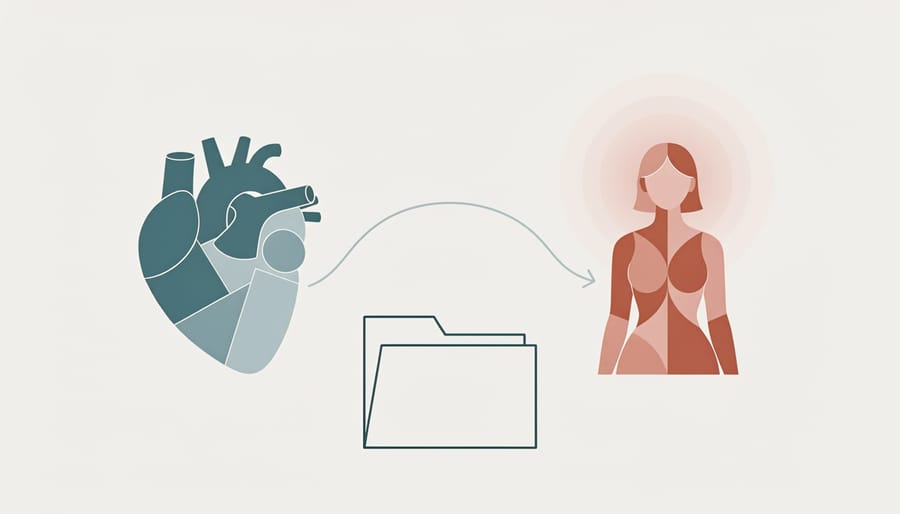
A check-up for strange symptoms isn’t a verdict. It’s a way of working out what’s actually going on, and there’s a sensible order to it. Palpitations can have many different causes, so the goal is to investigate them carefully rather than guess.
Here’s how that usually unfolds:
- Notice and jot down your symptoms: what you felt, how long it lasted, and whether it came with a hot flash, weakness, or shortness of breath.
- Talk to your doctor or a clinic about what you’ve noticed, even if it feels minor.
- Investigate the possible causes. One of the first steps is ruling out arrhythmias, abnormalities in the heart’s electrical rhythm, through appropriate cardiac testing.
- Once cardiovascular causes have been looked at, see a menopause specialist to explore whether hormonal changes may be playing a role.
- Make a follow-up plan, so you know what to watch for and when to check back in.
Notice that the heart comes first and hormones come second. That order isn’t about doubting that menopause is real. It’s about making sure nothing important gets missed before an explanation is settled on. If a menopause specialist later talks with you about options such as hormone therapy you’ll be making that decision with a clearer picture of your heart health.
[Quote or review from a qualified clinician to be supplied here.]
You don’t need to arrive with answers or a self-diagnosis. Describe what you feel in your own words and let the care team do the sorting. The aim is understanding what’s behind your symptoms, not slapping a label on them too fast.
Aftercare and Follow-Up: What to Do Once You’ve Been Checked
Getting checked is a big step, but it isn’t the finish line. Whether your results point to your heart, to menopause, or leave you with more questions than answers, what you do next matters.
If a cardiac cause turns up, follow the care plan you and your provider agree on. If your heart looks fine, a menopause specialist can help explore whether hormonal changes are playing a role. And if the answer is still unclear, that’s okay. Understanding what’s behind your symptoms can take more than one conversation.
Here’s a simple follow-up checklist to keep you engaged:
- Keep a symptom log noting what it felt like, when it happened, and what else was going on.
- Write down your questions before your next visit so nothing gets forgotten.
- Ask what to watch for and when you should come back.
- Share your results with any menopause specialist you see.
- Don’t dismiss changes just because you’ve been checked once.
That last point deserves a second look. A normal result today doesn’t mean new or different symptoms can be brushed aside next month. Palpitations can appear out of nowhere, and women’s heart symptoms are easy to overlook, so go back if something changes or returns.
Staying curious is part of caring for your heart through and after menopause. Keep asking questions, keep your records handy, and remember that you’re the one who knows what’s normal for your body.
Common Questions About Strange Menopause Symptoms and Your Heart
Are palpitations in menopause normal?
Palpitations can be a sign of many different causes, so it’s best not to assume they’re simply menopause. The goal is to investigate what’s behind them, and that starts with getting them assessed.
Can a hot flash cause a racing heart?
Palpitations can accompany a hot flash, but they can also appear out of nowhere. Because the two can overlap, a racing heart is worth mentioning to your health care provider rather than explaining away.
Could chest tightness be a heart attack even without sharp pain?
Yes, it’s possible. For women, chest pain can seem more like discomfort or tightness, and symptoms can include pressure or burning. If it comes with weakness, shortness of breath, or a rapid heartbeat, seek emergency care right away.
Who should I see first, my doctor or a menopause specialist?
Start by having your heart looked at, since one of the first steps is to rule out arrhythmias through appropriate cardiac testing. Once cardiovascular causes have been investigated, a menopause specialist can help explore whether hormonal changes play a role.
What if my tests come back normal?
That can be reassuring, and it often points the conversation toward other possible causes, including hormonal changes. If your symptoms continue or change, go back and say so, because your experience still matters.
None of these answers are meant to diagnose you. They’re here to help you feel confident asking the right questions, and to remind you that getting a symptom checked is never an overreaction.
Your symptoms are real, and they deserve a real answer. The flutter during a hot flash, the odd tightness in your chest, the feeling that something just isn’t right: none of it has to be brushed off as “just menopause” before your heart has been looked at. Checking the heart first, then bringing in a menopause specialist to explore hormones, is a sensible order that puts you in charge of the process.
Asking is never overreacting. Heart symptoms in women are easy to miss, and your instincts count for something. If something feels new, unusual, or worrying, talk with your health care provider, and seek emergency care right away if symptoms are sudden or severe.
This is what Menopause and Women’s Heart Health 101 is all about: knowing your body, asking good questions, and staying engaged through every stage. If this article helped, share it with a friend who might be wondering the same thing, and keep exploring the other resources on the site.