
 dorris
You can know if you have endometriosis by tracking your symptoms and taking them to a doctor, who can often make a diagnosis from your medical history and a physical exam alone. No surgery is needed. No scan is required either, though ultrasound or MRI may be used to learn more about what’s going on.
The signs to watch for start with the most common one: painful periods, known medically as dysmenorrhea. Pain that keeps you home from work or school, or that gets worse over time, deserves a conversation with your doctor. It isn’t something you simply have to live with.
Here’s the part nobody warns you about. Getting answers can take a while. In Canada, a diagnosis takes an average of five years, and in British Columbia the average wait to see a gynecologist is 40 weeks. That’s a long stretch of hurting while you wait, and it’s the reason so many women start doubting themselves.
You don’t have to wait in silence, though. The path begins with your primary care physician, who can refer you to a gynecologist, and what you bring to that first appointment matters. Below, we’ll walk through the symptoms, how diagnosis works, and how to prepare so you’re heard the first time.
What Endometriosis Is, in Plain Language
Endometriosis is a condition where tissue similar to the lining of the uterus (the womb) grows in places outside it, such as on the ovaries, the fallopian tubes, or the surfaces inside the pelvis. Each month, that tissue can respond to your hormones much like the lining inside your uterus does. But unlike a period, it has nowhere to go, which can lead to inflammation, irritation, and pain.
It helps to know that endometriosis is common and it is a genuine medical condition, not a sign that you’re being dramatic or can’t handle your period. Researchers are still working to understand exactly why it develops, so no one should tell you it’s something you caused.
The most important thing to take from this section is simple: pain that disrupts your life is not something you’re expected to “put up with.” Many women are told, sometimes for years, that bad cramps are just part of being a woman. They aren’t always. If your symptoms are affecting your work, school, or daily routine, that is reason enough to start a conversation with a healthcare provider.
The Signs That Point Toward Endometriosis

Why Period Pain Gets Dismissed (and Why You Shouldn’t Dismiss It)
Picture a 17-year-old who misses class every month because her cramps are so severe she can’t stand up straight. She tells her mom, then a school nurse, then a doctor. Each one gives her a version of the same answer: “Periods hurt. It’s just part of being a woman.” So she stops asking and learns to plan her life around the pain instead.
Her story is a composite, but plenty of women will recognize it. Painful periods are so widely talked about that many of us assume suffering is the baseline. That belief can quietly delay care, which may be one reason it can take an average of five years to be diagnosed with endometriosis in Canada.
Here’s what’s worth holding onto: dysmenorrhea, the medical term for painful periods, is the most common symptom of endometriosis. Pain that sends you to bed, keeps you from work or school, or feels very different from what the women around you describe deserves a real conversation, not a shrug.
You know your body better than anyone. If something feels off, that instinct counts as information. Speaking up, asking questions and asking again is not complaining. It’s the same self-advocacy that protects every part of your health, from your pelvis to your heart.
How Doctors Diagnose Endometriosis
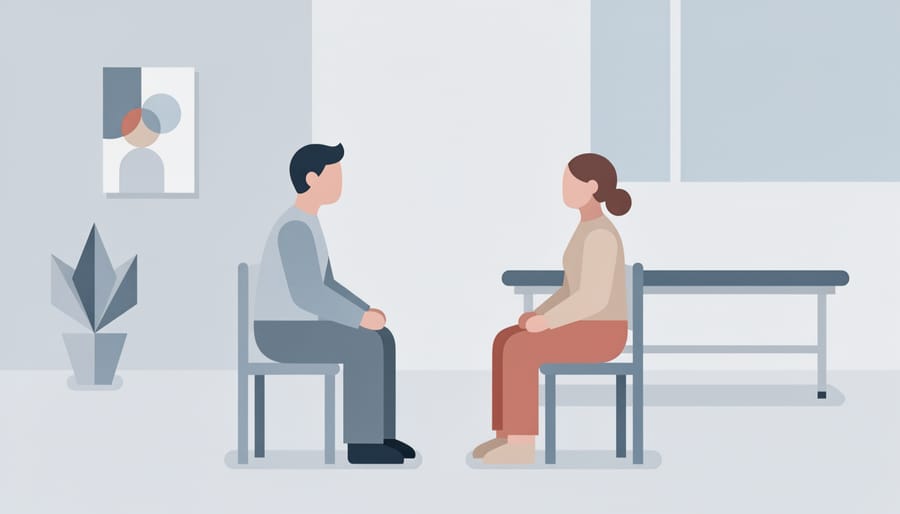
When you see a doctor about possible endometriosis, the visit usually starts with a conversation, not a scan. Your doctor will ask about your medical history and your symptoms: when your pain started, how it lines up with your period, and how much it gets in the way of work, school, or sleep. That discussion carries real weight, because the most common symptom of endometriosis is dysmenorrhea, or painful periods. Details you might think are minor, such as missing days of work, are exactly what helps.
From there, your provider may do a pelvic examination and, if it would help, arrange imaging. Here is how the steps fit together:
| Step | What it involves | What it can tell you |
|---|---|---|
| History and symptom discussion | Talking through your pain, your cycle, and how symptoms affect daily life | Whether your pattern fits endometriosis and what to look at next |
| Pelvic exam | A physical examination by your healthcare provider | Physical findings that, together with your history, can support a clinical diagnosis |
| Ultrasound | Imaging of the pelvic area | Additional information to support your provider’s assessment |
| MRI | More detailed pelvic imaging, used when advanced ultrasonography is needed | A closer look when the ultrasound doesn’t give enough answers |
Here’s the part many women don’t expect to hear: a clinical diagnosis can be made based on your medical history and a physical examination. No imaging or surgical confirmation is required. If you’ve been waiting for a scan or an operation to “prove” your pain is real, know that your story and an exam can be enough for your provider to act on.
Imaging still has a role. If you’re curious about how it works, our look at ultrasound detection explains what scans can and can’t show. The SOGC guideline on endometriosis diagnosis also says providers should order pelvic MRI when needed if advanced ultrasonography is called for. To hear how the journey unfolds for others, read these real patient journeys.
[Expert contribution placeholder: a gynecologist or family physician to share, in their own words, how they approach a first conversation about painful periods and when they recommend imaging.]
Your Path From Family Doctor to Specialist in Canada
In Canada, the road to an endometriosis diagnosis usually starts at your primary care physician’s office, whether that’s a family doctor or a nurse practitioner. They’ll talk through your symptoms and history, and based on what they hear, they can refer you to a gynecologist.
Here’s the part that’s worth knowing going in: it can take an average of five years to be diagnosed with endometriosis in Canada. That number isn’t meant to discourage you. It’s a good reason to raise your concerns sooner rather than later, and to walk in prepared so your appointment counts.
Waiting for a specialist can also take time. In British Columbia, for example, the average wait to see a gynecologist is 40 weeks. Wait times vary depending on where you live, so it’s worth asking your own provider what the situation looks like in your province or region. They’ll often have a better sense of local timelines than any national average can offer.
Think of the referral as a process that begins with a single conversation. You don’t need to have everything figured out before you book that first visit. Many women find it helps to keep track of their symptoms in the weeks leading up to it (we’ll walk through how to do that shortly), so your doctor sees the full picture.
And if your symptoms change or get worse while you’re waiting, tell your primary care provider. Staying in touch means your care team can keep your situation on their radar, and you won’t be left wondering what comes next. Starting early won’t make the system faster, but it does get you into the queue, and it keeps you moving toward answers.
How to Prepare for Your Appointment
Walking into an appointment with a little preparation can make a big difference, and you don’t need any medical background to do it well.
Start a simple symptom and pain diary a few weeks before your visit. A notebook or the notes app on your phone works fine. Jot down when pain shows up, how strong it is on a scale of one to ten, and what helps or doesn’t. Note how it affects your life too: missed workdays, cancelled plans, trouble sleeping. Those details help your provider see the full picture.
Next, write down your questions, because it’s easy to blank once you’re in the room. You might ask what could be causing your symptoms, what tests make sense, and what the next step is. It’s also fair to ask when you should follow up, and what to do if your symptoms get worse in the meantime.
If it feels right, bring a support person. A friend or family member can listen, take notes, and speak up if you feel rushed.
Everyone’s access to care looks different, so do what’s realistic for you. Even a few scribbled notes count. If you’d like to see what’s new, our look at the 2026 updates is a good place to start.

Frequently Asked Questions About Getting an Endometriosis Diagnosis
Getting answers about endometriosis can feel overwhelming, so here are the questions readers ask most often.
Can endometriosis be diagnosed without surgery?
Yes. A clinical diagnosis can be made based on your medical history and a physical examination, and no imaging or surgical confirmation is required for it.
What is the most common symptom?
Dysmenorrhea, or painful periods, is the most common symptom of endometriosis. If your period pain regularly disrupts your daily life, it’s worth raising with a doctor.
Who should I see first?
Start with your primary care physician. Based on your symptoms, they can refer you to a gynecologist.
How long does diagnosis usually take in Canada?
It can take an average of five years to be diagnosed with endometriosis in Canada. In British Columbia, the average wait time for a gynecologist is 40 weeks, though waits vary, so ask your provider about your own province.
You may also wonder what imaging could involve. Diagnosis usually includes a conversation about your history, a pelvic exam, and sometimes an ultrasound or MRI. The SOGC guideline says providers should order a pelvic MRI if advanced ultrasonography is needed.
And what if your pain isn’t endometriosis? That’s a fair question, because painful periods don’t always mean this condition. Other health issues can cause similar symptoms, and even hormonal shifts can bring surprises. If you’re in your late thirties or forties, for example, pre-menopause symptoms can sometimes change your cycle too.
Only a healthcare provider can tell you what’s really going on. Try not to self-diagnose or talk yourself out of getting checked. Bring your questions, and let your doctor help you sort it out.
Key Takeaways for Moving Forward
Before you close this page, here’s what matters most. Painful periods that get in the way of school, work, or daily life deserve a real conversation with a doctor, because that kind of pain is the most common symptom of endometriosis and isn’t something to simply tolerate.
A few practical reminders. Ultrasound or MRI may be part of your workup, but they aren’t always the first step. Wait times can be long, including an average of 40 weeks to see a gynecologist in British Columbia, so booking that first appointment sooner rather than later gives you a head start. Bring your symptom notes, ask what comes next, and trust what you know about your own body.
You know your body better than anyone else does. If your periods are painful enough to disrupt your work, your plans, or your sleep, that’s reason enough to book an appointment with your family doctor, even if you’ve been told before that it’s “just bad cramps.” Going in with a clear picture of your symptoms is a strong first step, and starting the conversation early matters, since the road to a diagnosis in Canada can be long.
Taking charge of your health this way is what this site is all about. Pain, stress, and ongoing health conditions don’t stay in their own lanes. How well you manage them can shape your overall wellbeing, including your heart health. Speaking up for yourself is part of caring for your whole self.
This article is for educational purposes only and isn’t a substitute for personal medical advice. Only a healthcare provider can tell you what’s going on with your body.